The Fiver Bap Test: Breakfast Rolls, Forecourt Markups and the Sauce Clause
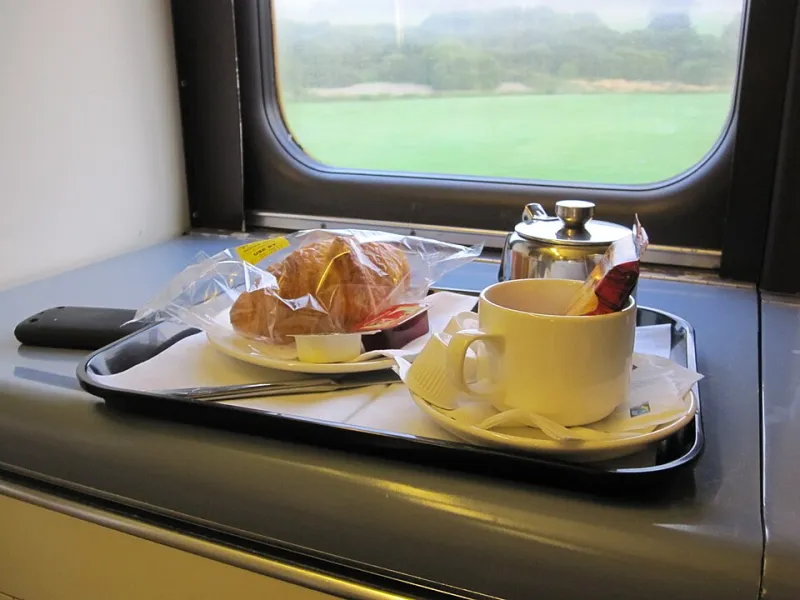
Photo: Phil Richards from London, UK, CC BY-SA 2.0, via Wikimedia Commons
There are few things more British than eating a sausage bap out of a paper bag while trying to unlock a car with one hand. It is breakfast, hand-warmer and minor logistical challenge all at once. But the morning roll has quietly become a price test: some places still treat a fiver as a fair budget, while others seem to think the word “artisan” justifies another £2.50.
For this ChewDays audit, we set a simple benchmark: £5. That is the line between a breakfast that feels like good value and one that feels like a small tax on being hungry before 10am. We compared the usual suspects — motorway services, petrol forecourts, high-street cafés and supermarket counters — on price, filling generosity, sauce policy and queuing time. These are typical November 2026 prices, not a scientific sample, but the patterns are hard to miss.
The £5 rule
A good breakfast bap does not need to be complicated. It needs a decent roll, a filling that reaches the edges, and sauce without a side order of resentment. We scored each stop on four things:
- Price: does it stay under or near a fiver?
- Filling: is it generous, or just a rumour of bacon?
- Sauce: free sachets, pump-action condiments, or a 30p charge?
- Queue: five minutes is fine, ten minutes means you are now late.
The winner is not automatically the cheapest. A £3.50 bap with one rasher and a dry roll is not value; it is a disappointment in bread form. But neither is a £6.50 motorway roll that tastes like it was assembled by a committee.
Motorway services: convenience with a captcha
Motorway services have a captive audience, and the breakfast roll knows it. In 2026, a bacon or sausage bap at a services outlet commonly lands between £5.49 and £6.49. Sometimes it is decent: soft roll, proper ketchup sachets, bacon cooked in a batch that has not been sitting under a lamp since dawn. Often it is merely fine — and fine is an expensive word when you are already paying for parking-adjacent coffee.
The sauce policy is usually reasonable, but the queue is the real gamble. At 8am on a Friday, you can lose ten minutes behind someone ordering a complicated coffee for a car full of people. The bap then becomes a side quest. Verdict: only when trapped. A services roll is emergency rations, not a destination breakfast.
Petrol forecourts: the wildcard
This is where the fiver still has a fighting chance. Independent garages, village petrol stations and forecourt shops attached to the big supermarkets often sell sausage baps for £3.50 to £4.50. Bacon rolls can be similar. The quality swings wildly, but when it is good — fresh batch, soft bap, bacon not cremated — it is one of the great quiet bargains of British food.
The sauce situation is usually straightforward: sachets by the till, maybe a pump bottle that has seen things. The queue is short because most people are buying diesel, not dinner. The risk is timing. If you arrive after the morning rush, you may get the last bap from a tray that has been keeping warm since 7:15. Verdict: best value if the tray looks busy and the staff look awake.
High-street cafés: the sauce premium
A proper café should be the natural home of the breakfast bap. In 2026, a bacon roll at an independent high-street café is often £4.50 to £5.50, with sausage similar. Some include butter, some include a hash brown, some charge extra for both. The filling is usually better than forecourt fare, and the roll is less likely to collapse on the walk to the bus stop.
But this is also where the “sauce clause” starts to bite. A café that charges 30p for ketchup on a £5.50 bap is not being precious; it is eroding the value. The same goes for a 50p upgrade to brown sauce. If the bap is already at the top of the fiver budget, the extras matter. Verdict: worth it when the filling is generous and the sauce is free. Otherwise, you are paying for the chair.
Supermarket counters: the quiet contender
Supermarket cafés and in-store bakeries have quietly become the most reliable sub-£5 breakfast stop. A sausage bap often sits around £3.75 to £4.25; bacon is similar. The filling is consistent, the sauce sachets are usually free, and the queue moves because everyone is either doing a weekly shop or pretending to.
The weak point is the roll itself. Some supermarket baps are soft and pleasant; others have the texture of a cushion that has been left in a warm car. But at this price, you can forgive a lot. Add a tea and you are still near the fiver mark, which is more than can be said for most high-street options. Verdict: the safest bet for a weekday breakfast that will not make you wince at the till.
The sauce clause
Sauce should not be a luxury item. A breakfast bap without ketchup or brown sauce is like a chip without salt — technically food, but missing the point. Any place charging for a tiny sachet gets marked down in our book. The same applies to butter. If a café is charging extra for butter on a roll, it is not a value breakfast; it is a negotiation.
The fiver verdict
If you want the best chance of a good breakfast for £5 or less, head to a supermarket counter or a busy petrol forecourt. Both can be inconsistent, but the price leaves room for a slightly wonky roll. High-street cafés are worth the extra 50p when the filling is generous and the sauce is free. Motorway services are the fallback when there is no other option — and at £6.50, they are not really in the fiver club at all.
The best morning bap is not the most expensive one. It is the one that arrives hot, generous and with a free squirt of ketchup. That is still a reasonable ask in 2026 — you just have to know where to queue.